When 85% of Decision Makers Engage: Rethinking Jersey Patch Value in March Madness
Published on
by Jack Milko
Key Insights:
85% of senior decision makers engage with March Madness, significantly over-indexing compared to the general public.
Jersey patch sponsorship value is built across the full college basketball season, not just during the NCAA Tournament.
March Madness multiplies the impact of existing partnerships, even when jersey patches are not worn during postseason play.
NIL integration has fundamentally changed the ROI and structure of collegiate jersey patch deals, making athlete participation a strategic advantage.
In this Insight:

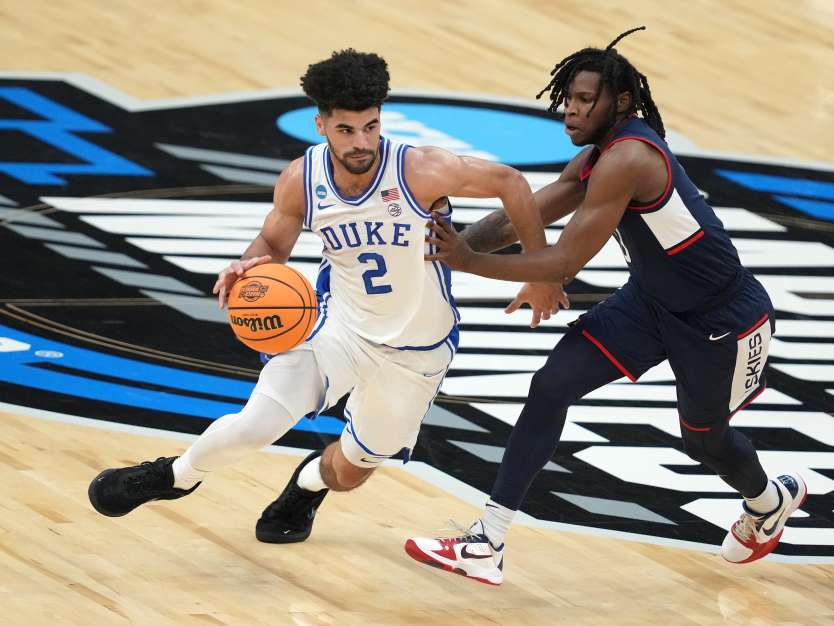
Sports fans will remember the 2026 NCAA Tournament for years to come. More specifically, college basketball enthusiasts will forever associate this March Madness with the East Regional Final: an instant classic that saw No. 2‑seeded Connecticut defeat No. 1-seeded Duke on a miraculous three-point shot in the final seconds. Connecticut ultimately made it to the National Championship game, losing to Michigan in the final, but the moment had already been defined.
That shot became the memorable moment of the college basketball season: dramatic, emotional, and unforgettable. Braylon Mullins’ game-winning, 35-foot three-pointer went viral around the world, and was replayed endlessly across social media, ESPN’s SportsCenter, and news broadcasts nationwide. The television audience for this game peaked with 18.9 million viewers, further proof to how powerful March Madness is in the realm of sports. In fact, the entire 2026 NCAA Tournament set viewership records, continuing March Madness’ long-standing role as one of the most powerful audience drivers in American sports.
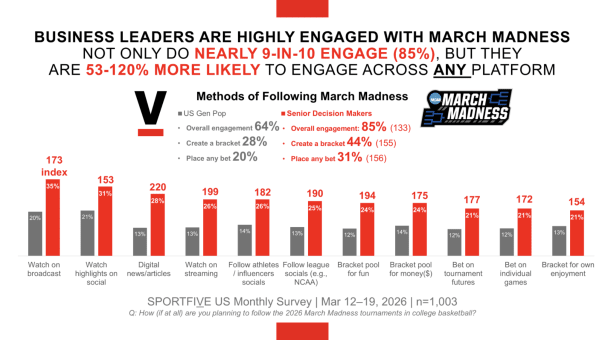
Crucially, that attention is not limited to sports fans alone. SPORTFIVE research shows that 85% of senior decision makers actively engage with March Madness, making them:
53% more likely to consume tournament social highlights
73% more likely to watch live broadcasts
Nearly twice as likely to participate in bracket pools
73% more likely to enter paid bracket competitions
In short, March Madness does not just reach business leaders; the tournament significantly over-indexes with them.
Looking ahead from the 2026 NCAA Tournament, college sports will look different going forward, thanks to a new commercial era beginning this August. Starting with the 2026-27 academic year, NCAA Division I programs will be permitted to sell jersey patch sponsorship deals. Uniform real estate has emerged as one of the most valuable new assets in American sports, and now, collegiate athletics will join the trend.
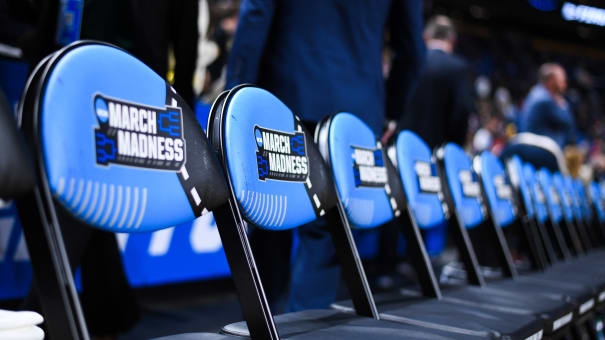
That said, teams cannot wear these patches during postseason events such as March Madness or the College World Series because of potential conflicts of interest with current NCAA partners. Perhaps that opens the door for the NCAA to create a ‘March Madness-specific’ jersey patch for every participating team in the 2027 Tournament and beyond. Three Fortune 100 companies, AT&T, Capital One, and Coca-Cola, serve as the “Official NCAA Corporate Champions” partners, with their branding appearing across every tournament property: from commercials to in-arena signage and even digital campaigns within the March Madness app.
Could the NCAA look to one of these brands for a tournament specific jersey patch in the future? Imagine if AT&T, Capital One, Coca-Cola, or any of the NCAA’s 14 other Corporate Partners had their branding attached to Mullins’ jersey? They too would have been a part of worldwide, cultural phenomenon and could have received a tremendous return on their investment from this viral moment.
With this in mind, let’s explore jersey patches, and the potential impact they have for brands in the collegiate space.
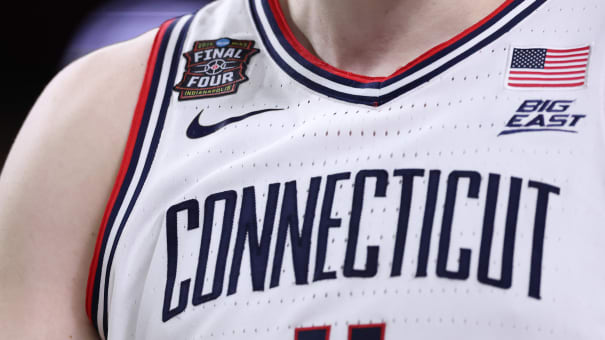
March Madness may be the crescendo for college basketball, but jersey patch value is created across the entire season. From November through early March, college basketball delivers hundreds of nationally televised games, conference races, rivalry matchups, and player‑driven narratives. A jersey patch is present in all those moments: on live broadcasts, in highlight packages, across social platforms, and throughout earned media, long before the bracket is revealed on Selection Sunday in Mid-March.
But who should schools look to for jersey patch partnerships? Let’s circle back to Connecticut and Duke, two of the largest institutions in the sport. Both teams have long standing histories in college basketball and an alumni base of more than 200,000 each. These are not just fan bases; they’re expansive professional communities filled with senior decision‑makers, founders, and high‑value consumers. Connecticut's strong insurance and financial protection sectors align well with UConn basketball, which provides these brands with credibility, alumni connections, and ongoing national exposure grounded in the local economy.
Duke presents a different profile. Its alumni network is heavily represented in finance, consulting, venture capital, and professional services, anchored by proximity to major East Coast financial hubs and a longstanding academic reputation tied to leadership and performance. That makes financial services and B2B brands particularly well suited to leverage Duke basketball as a platform to reach decision‑makers at scale. Think of institutions such as Deloitte, Ernst & Young, or PWC, all of which recruit heavily from top academic schools like Duke.
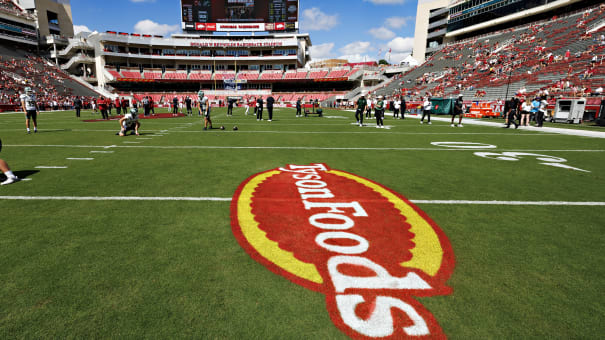
That said, many top programs have already moved decisively into the jersey patch space. Take the University of Arkansas for example. In March 2026, the University of Arkansas signed a five-year-deal with Tyson Foods that will see their branding appear across every uniform on all 19 Razorback teams. Tyson, one of the world’s largest food processors, is headquartered in Northwest Arkansas, near where the University is located. Already visible across the Arkansas football field and basketball courts, Tyson is now expanding its relationship with the University, using jersey patches as additive platforms that deepen its connection to the institution and its athletes.
This deal is also notable for how it integrates Name, Image, and Likeness (NIL) deals, an incredibly important part of collegiate athletics in the 2020s. Roughly 90% of the revenue generated by this deal is expected to flow directly to the athletes from NIL opportunities with Tyson, creating immediate financial impact while building brand loyalty among the student-athletes for years to come.
To tie it back to March Madness, Tyson’s brand will already be linked to Razorbacks athletics when the 2027 NCAA Tournament rolls around. Even though their branding will not appear on the jersey’s themselves, business leaders will continue to tune into NCAA Tournament coverage and associate the Tyson brand with the Razorbacks. Plus, plenty of opportunity exists for the University to leverage its partnership across digital platforms and other activations come tournament time, when the spotlight shines brightest on them.
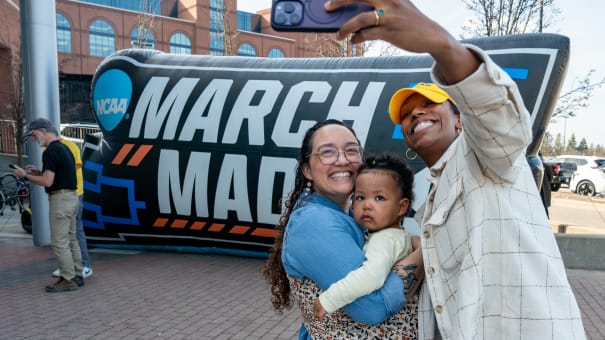
While the physical patch comes off during the NCAA Tournament, and other marquee championships for that matter, the partnership does not.
The most effective jersey patch deals are structured as gateways to broader integration, where the patch signals a deeper, multi‑platform relationship that remains fully active during March Madness. That includes digital storytelling, activations, hospitality, community initiatives, and media extensions tied to a team’s tournament run.
SPORTFIVE’s research shows that senior decision‑makers don’t engage with March Madness in just one way. They are significantly more likely to:
Watch live broadcasts and highlights
Follow teams and athletes on social platforms
Engage with brackets and pools for fun or money
Consume tournament coverage across digital news and streaming
That multi‑platform behavior underscores a critical point: brands do not need to be on the jersey during the NCAA Tournament to be present where it matters most. They need to be part of the ecosystem surrounding it.
Collegiate jersey patches deliver omnipresent, always-on visibility for brands, while creating a powerful bond rooted in trust and authenticity through association with a respected academic institution. College sports fans have a deep emotional connection to their programs, and an effective patch partnership allows brands to authentically tap into that loyalty and transfer it in a meaningful way.
Bob Brennfleck, Head of U.S. Commercial Sales
The rise of NIL has fundamentally expanded the strategic upside of jersey patch partnerships.
Today’s leading partnerships are structured to support not only athletic departments, but student athletes themselves. In an era defined by the transfer portal and escalating NIL budgets, the total economic opportunity available to an athlete is often a decisive factor in where they choose to compete.
As a result, the smartest deals are designed to create compliant, meaningful participation in the commercial ecosystem surrounding a program, rather than treating NIL as a secondary add on. When executed effectively, those opportunities become a competitive differentiator in both recruiting and retention.
Nowhere is that impact more visible than during March Madness, when individual players can become national figures overnight. In those moments, NIL extensions tied to institutional partnerships frequently deliver the greatest incremental value, amplifying brand exposure while directly benefiting the athletes who drive it.

SPORTFIVE has been at the center of jersey patch evolution long before it reached college athletics, advising rights holders and brands across leagues, continents, and competitions.
From brokering the jersey patch partnership between the Los Angeles Lakers and Bibigo, to supporting the NBA’s league‑level jersey patch program with Emirates, SPORTFIVE has helped define how uniform sponsorships scale when they are treated as strategic platforms rather than short‑term media buys.
Most recently, SPORTFIVE advised on the San Francisco Giants’ jersey patch partnership with Airwallex, a deal that reflects how modern patch agreements can combine premium visibility with global business objectives.
Those same principles now apply to college sports: scarcity, authenticity, and long‑term storytelling matter, especially when the audience includes the very decision‑makers brands are trying to reach.
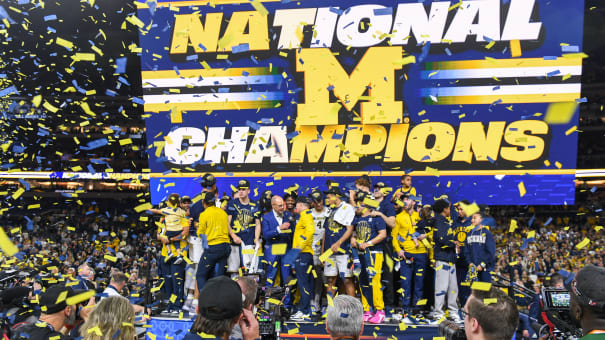
March Madness is fleeting. Jersey patch partnerships are not. The programs that will win in this space are those that position jersey patches as multi‑year brand platforms, not tournament‑dependent assets. Likewise, the brands that benefit most understand college basketball as a season‑long narrative, with March Madness as the climax, not the entire story.
Crucially, those partnerships must resonate authentically with the institutions themselves. The University of Arkansas and Tyson Foods illustrate how regional relevance and shared identity can elevate a patch from sponsorship to true partnership. Because when nearly nine in ten senior decision‑makers are paying attention, and doing so across every platform, the question isn’t whether your logo is on the jersey. It’s whether your brand is part of the journey.
Bottom Line for Brands and Rightsholders
Jersey patch partnerships in college athletics are no longer transactional sponsorship assets. When designed as multi-year platforms, with NIL integration, digital storytelling, and institutional alignment, they deliver disproportionate value during moments like March Madness, when senior decision makers are most engaged across every platform.
Sponsorship is the financial support for a sporting event, organisation or athlete by an outside body, for the mutual benefit of both parties. At the professional level this tends to be by companies, to raise the profile of their brand by associating it with the athlete.
The company aims to generate brand awareness and customer recognition, whilst the event, organisation or athlete receives a boost in funding.
A popular example is a brand logo printed on a team shirt. Visibility is guaranteed, even more so in the modern world with social media and online highlights.
In the land of media and marketing rights today, there is no cookie-cut solution for brands, and a simple logo placement will not provide the sufficient return on investment (ROI) for sponsorship, nor does it give their target audience the “why?” - the reason to spend their money and engage with the product.
Companies investing in sports sponsorship need to look at the bigger picture to engage with fans and not rely on just one piece of inventory.
In modern sports, several different types of partnerships exist, all of which can generate significant value.
Sponsorship deals are perhaps the most common form of sports partnerships. Companies invest in sports teams or events in exchange for advertising and brand exposure. These deals provide financial support to the teams and help sponsors connect with their target audience.
Strategic alliances involve two or more sports organisations coming together to achieve common goals. This could include sharing resources, facilities, or even talent. Such partnerships can lead to improved facilities, enhanced scouting networks, and ultimately, better performances on the pitch.
Successful sports teams recognize the importance of engaging with their local communities. Community partnerships involve initiatives such as youth sports programs, charity events, and education. These partnerships not only create goodwill but can foster a committed and engaged fan base.
In today's digital age, media collaborations are key. Sports teams and media outlets often join forces to collaborate on engaging content, including exclusive interviews, behind-the-scenes footage, and live broadcasts. These partnerships boost visibility for both parties.
Marketing is crucial in sports for several reasons. Firstly, it enhances the visibility and popularity of sports teams, athletes, and events, attracting a broader audience and increasing fan engagement. Effective marketing strategies help create a strong brand image, fostering a connection between fans and their favourite teams or athletes. This emotional connection often leads to increased fan loyalty and support, translating into higher ticket sales, merchandise purchases, and overall revenue for sports organisations.
Moreover, marketing in sports plays a pivotal role in securing sponsorships and partnerships. Brands are drawn to sports entities with a significant and engaged fan base, offering lucrative opportunities for sponsorship deals. These partnerships not only provide financial support but also contribute to the overall prestige and marketability of the sports brand.
In the contemporary landscape, digital marketing and social media have become integral components of sports marketing, allowing for real-time interaction with fans, personalised content delivery, and global reach. Social media platforms serve as powerful tools to amplify the sports narrative and engage with fans on a more intimate level.
Ultimately, successful sports marketing goes beyond promoting matches and events; it cultivates a culture, builds communities, and transforms sports into a compelling and marketable entertainment product, driving the industry's growth and sustainability.
SPORTFIVE is a global sports marketing agency that specialises in various aspects of the sports and entertainment industry. The agency works with sports organisations, teams, and brands to optimise commercial opportunities.
One of SPORTFIVE's key areas of focus is the sale and management of sports media rights, including broadcasting and digital distribution deals. They negotiate and facilitate partnerships, sponsorships, and naming rights for sports entities, helping them enhance their brand value and revenue streams.
Additionally, SPORTFIVE provides expertise in marketing strategies, assisting clients in building strong connections with their target audiences. Their comprehensive approach spans across the sports business landscape, from media rights to sponsorship management, contributing to the overall growth and success of their clients in the dynamic world of sports marketing.
If you are interested in becoming a sponsor, the specific contact person or department will depend on the entity or property you want to sponsor.
Sports Marketing Agencies: Agencies like SPORTFIVE specialise in connecting sponsors with sports opportunities. Contact their business development or sponsorship departments.
Sports Teams or Clubs: Contact the sponsorship or partnership department within the sports team or club.Look for information on the team's official website regarding sponsorship opportunities and contact details.
Sports Events or Leagues: Reach out to the event organiser's sponsorship or partnership department. Event websites often have dedicated sections providing information for potential sponsors.
Athletes: Contact the athlete's management or agent, who typically handles sponsorship inquiries. Some athletes manage their sponsorships independently, and contact information may be available on their official website or social media.
Sports Federations: Reach out to the sponsorship or business development department of the relevant sports federation. Check the official website of the federation for sponsorship guidelines and contact information.
For specific details, visit the official website of the entity you are interested in sponsoring or directly inquire through the provided contact information. If the information is not readily available, consider reaching out to the general contact line or email provided on their official platforms, and they can direct you to the appropriate department.
